Our Creative Communities group has recently been awarded a five-year CAREER grant from the National Science Foundation to study and strengthen the important yet invisible work of informal educators. Making and tinkering spaces in community-based organizations, libraries, and museums can provide the tools, materials, and social support for children, families, and community members to engage in transformative learning experiences. Behind the scenes, the informal educators (e.g. staff, volunteers, teen techs) who manage these spaces and learning experiences make many decisions from the displayed materials to the activity prompts to how they partner with organizations so that their community members feel welcome, take creative risks, and realize their goals.
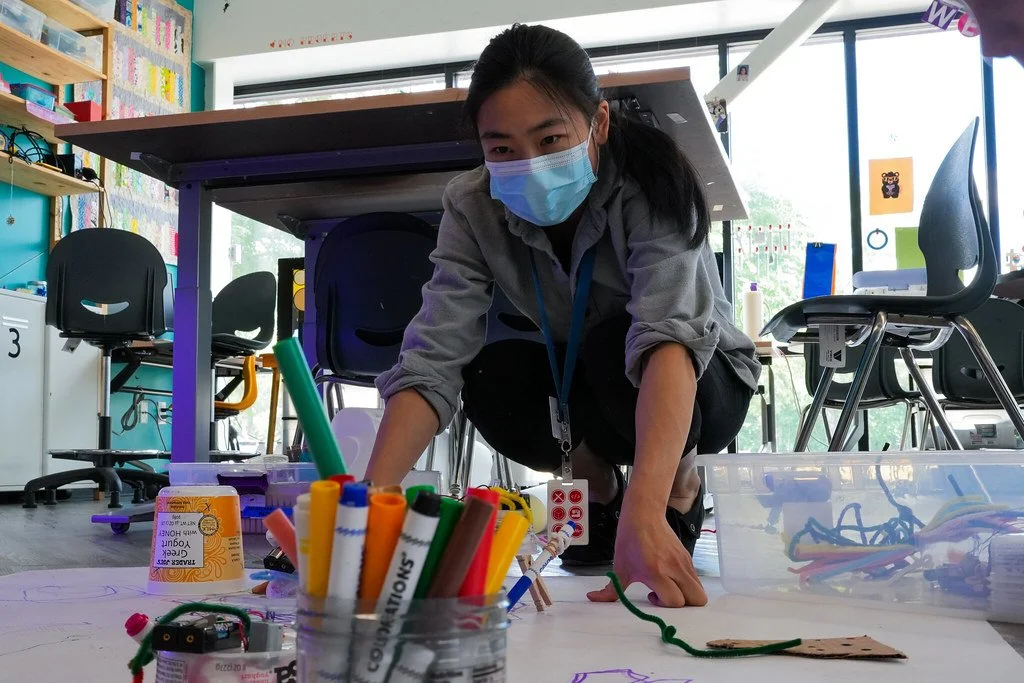
An educator prepares the materials and the space for a computational scribbling machines workshop at an ideaLAB makerspace at Gonzales Library
As new opportunities emerge or the sociopolitical context of their communities change, educators must continually redesign, repair, or build new material, social, and knowledge infrastructures to ensure their spaces actually serve their communities and enable their full participation in science, technology, engineering, math (STEM) learning. For example, as immigrant groups grow, they might create new signage in various languages or iterate on an activity prompt to make it more culturally meaningful. As youth interests expand, educators might re-organize materials to reflect and deepen those interests. As gentrification spreads, educators brainstorm with community partners and experiment with new forms of outreach to engage displaced groups. As these examples illustrate, educators negotiated their existing material (e.g. space), social (e.g. outreach), and knowledge infrastructures (e.g. community interests) to address embedded structural challenges and to welcome and support the meaningful participation of their community members. The kinds of decisions that educators make to adapt, repair, and redesign learning experiences and spaces have consequential impacts on how young people and families learn and deepen their participation.
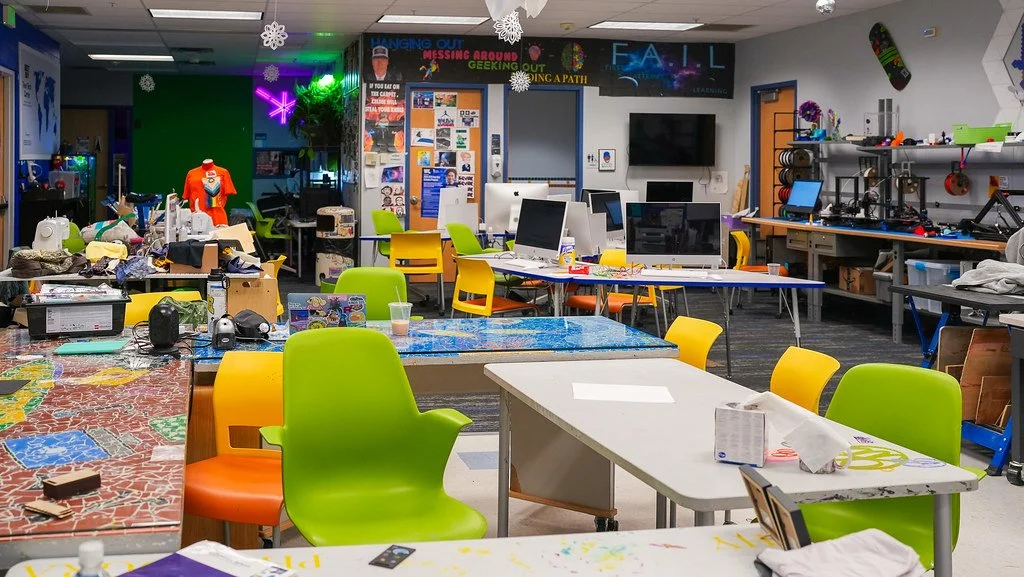
A photo from the Goldcrown Computer Clubhouse space as part of our pictorial publication: “Visualizing the Unseen Design Work of Educators”
Despite their essential work, much of the research and development within informal STEM experiences focus on the experiences of learners, which can render informal educators’ work invisible. This focus on learners’ experiences can position educators as passive disseminators of opportunities that result in educator resources that narrowly focus on skill development with tools or descriptions of activities. We have found in our long-term community-engaged work that educators need support in how to adapt these opportunities within the infrastructural realities of their organizations and communities on top of the additional infrastructures required to support STEM/computing opportunities (e.g. equipment, disciplinary knowledge, facilitation practices). Despite approaches like co-design to reduce barriers to implementation, part of the challenge is that infrastructural realities vary across contexts. The onus is often on educators to conduct this silent work of navigating their structures and systems, which can impact their well-being and labor as well as the experiences of learners.
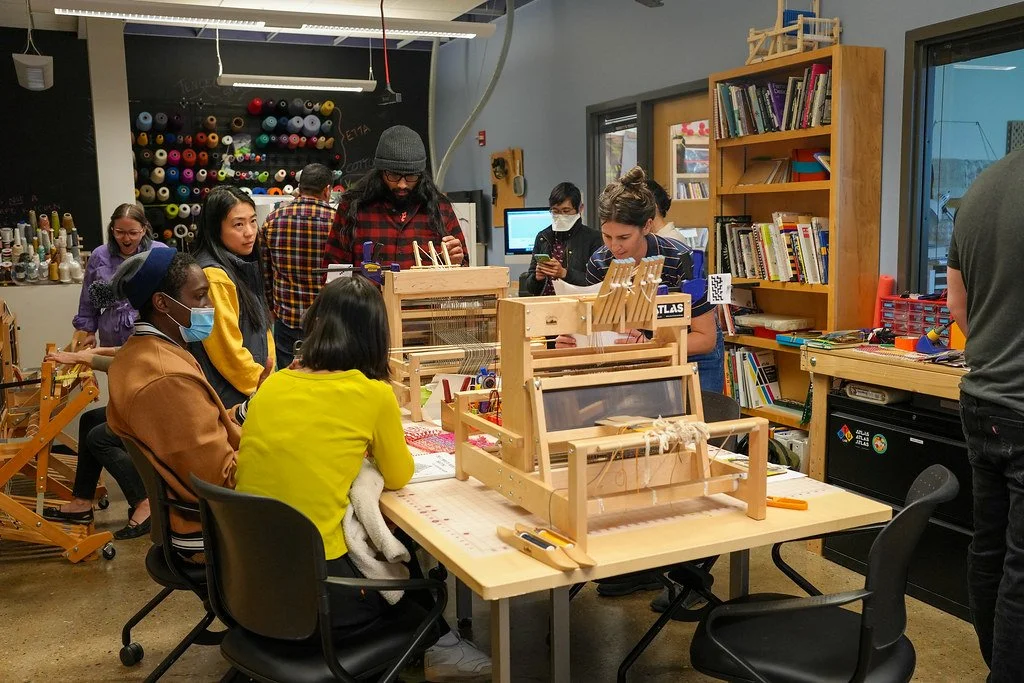
We invited our educator partners from the ideaLAB makerspace network at Denver Public Library and the Computer Clubhouses to explore and imagine possibilities with weaving and coding in their spaces through our bits and threads project with Laura Devendorf.
As part of our five year grant, we will engage collaborators across three informal settings: a museum, a library system, and a community-based organization to study and strengthen the instrumental yet invisible work of informal educators. Specifically, we will examine how educators across these settings navigate their material, social, and knowledge infrastructures as they attempt to incorporate new computational learning opportunities for youth and families in their organizations and communities. We focus on computational learning opportunities for this project as our team and our partners have been exploring ways to engage youth and families in playful, social, and physical experiences with computing through our past work with the Facilitating Computational Tinkering project. We use the lens of “infrastructuring” to examine the design, implementation, and improvement work of educators to navigate the material, social, and knowledge infrastructures of their organizations and communities.
This project will involve three phases:
an ethnography to examine the types of infrastructures and educators' emergent strategies to negotiate those infrastructures
critical reflection with educator partners related to the structural resistances and possibilities of their settings and communities
design and development of resources for informal educators to think systematically about the ways they collectively redesign and navigate their infrastructures towards full participation for all youth and families with computing.
We hope to develop a toolkit for educators that will include insights from our ethnography and activities and tools from our workshops with our educator partners across the three sites. Our team loves to create tools and resources for educators, and we like to explore creative possibilities that have included comics and zines in addition to highly visual facilitator guides. The findings and resources from this project will be shared widely with other STEM informal learning educators and organizations through professional networks and gatherings as well as with other researchers through academic venues such as publications and conferences.
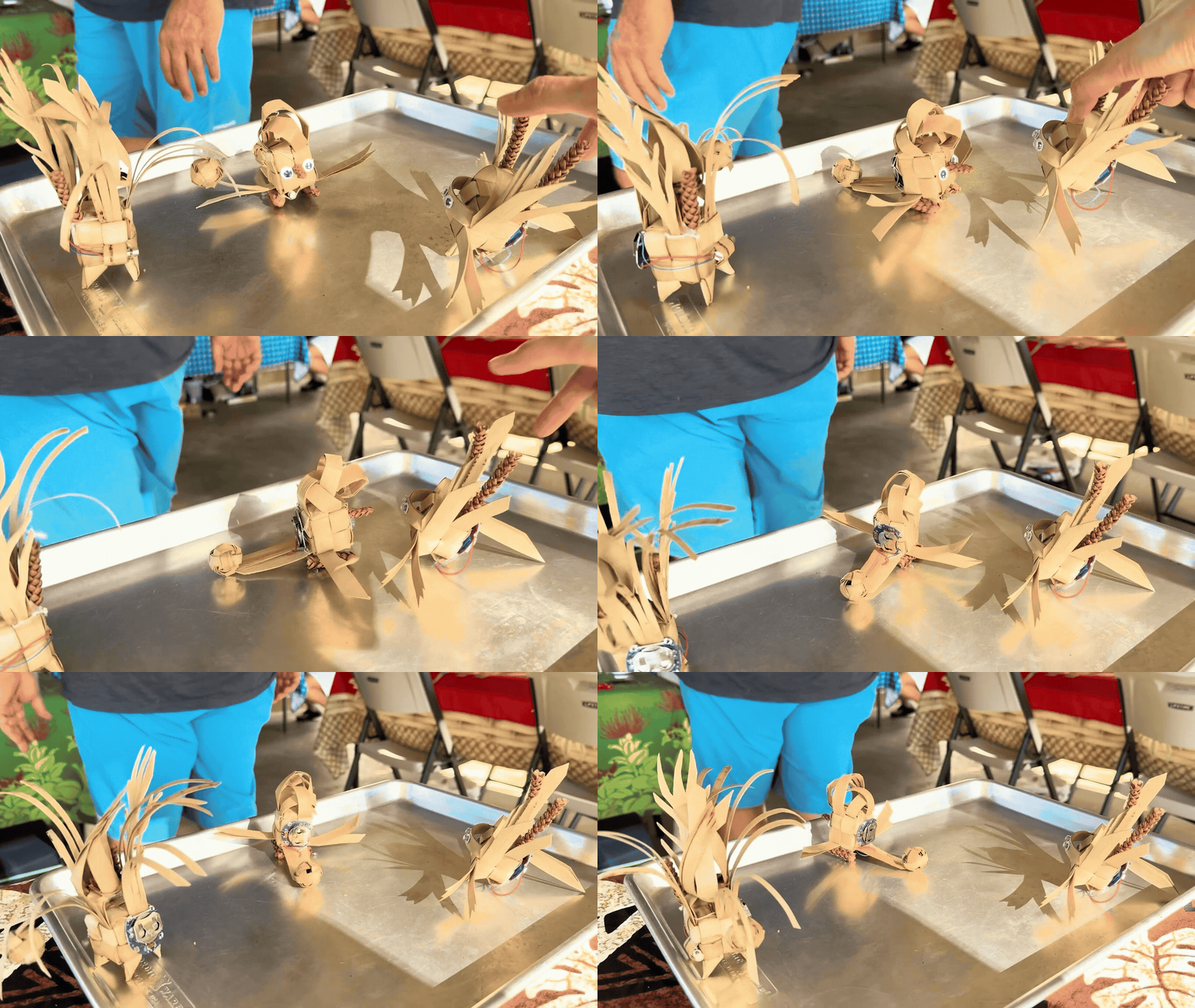
Lauhala bots created at the Ulana Sparks workshop at Nest Makerspace, a community partner who is collaborating with our team as part of this new project